Afro Nation is Returning to Detroit
The International Afrobeats and Amapiano festival loves the Motor City so much, they decide to come back again in 2024, bigger and better. Detroit hosted Afro Nation in 2023, becoming…

The International Afrobeats and Amapiano festival loves the Motor City so much, they decide to come back again in 2024, bigger and better. Detroit hosted Afro Nation in 2023, becoming the second U.S. city to host the international festival.
Afro Nation took to Instagram on Thursday to let Detroiters know they were coming back and ready to party with us again saying “You know the vibes, you bring the energy and you love the music! We loved the experience last year and can’t wait to be back where the magic of music started! Dates & location coming soon!”
Afro Nation is Returning to Detroit
Following its previous stops in Ghana, Portugal, and Puerto Rico, the international festival made its U.S. debut in Miami in and then Detroit in 2023. In addition to Afrobeats, the festival includes hip-hop, R&B, Amapiano, dancehall, and reggae from across the African diaspora. In spite of confusion about the venue and complaints about set times being released a day before the festival, attendees seemed to enjoy the event last year. Afro Nation donated $100,000 to the Motown Museum after the festival.
In partnership with Bedrock, Afro Nation visited Detroit on August 19 and 20 last year. Headlined by acts like Latto, Ari Lennox, Detroit's own Dej Loaf and of course Burna Boy, Afro nation was a huge success in Detroit last summer. The two-day outdoor festival was held at Bedrock's Douglass Site, which was once home to the Brewster-Douglass Projects. There were several events at last year's festival, including a comedy showcase that ran in parallel with the main event. Afro Nation organizer SMADE collaborated with local businesses like Detroit vs. Everybody to make special Afro Nation clothing that read “Afro Nation vs. Everybody” and “Africa vs. Everybody” for the weekend.
As of right now, Bedrock has not announced the dates or performers for Afro Nation Detroit 2024, however Metro Times has reached out to them to find out more information regarding the festival, so be sure to check their website and well as their social media platforms as the summer approaches.
6 Well-Known Landmarks Built And Designed By African Americans
Throughout the country, many buildings and iconic landmarks were built using the labor of enslaved people. The physical legacy of slavery can still be seen in the U.S. Capitol and the White House. The residences of former presidents, including George Washington's Mount Vernon and James Madison's Montpelier, and universities were built by slave labor. South Carolina's Fort Sumter, where the Civil War began in 1861, and the Castillo de San Marcos in St. Augustine, Florida, are other landmarks that were constructed with slave labor.
"I wake up every morning in a house that was built by slaves."
It's been over 400 years since the first 20 enslaved people were brought to America. This was highlighted by former First Lady Michelle Obama in 2016. She said, "I wake up every morning in a house that was built by slaves." She was talking about the White House. The first African American first lady delivered this speech at the Democratic National Convention in Philadelphia.
Two of Washington, DC's most well-known landmarks, the White House and the United States Capitol, were built in large part by enslaved African Americans. The National Archives holdings include wage rolls, promissory notes, and vouchers that document the work done by enslaved people on these two historic structures.
United States landmarks built by enslaved Black people.
According to the National Archives, enslaved people helped build the White House. The records have over 120 names of people listed as "Negro hire" who worked with white workers from the United States and Europe. Unfortunately, the record also states that the slave owners rather than the slaves were paid for their work. Building the White House took eight years to finish, with work beginning in 1792.
Business Insider reported that after its completion, presidents continued to use enslaved people to maintain the household. Additionally, seven presidents even brought their own enslaved people, including Thomas Jefferson, James Madison, Andrew Jackson, and Zachary Taylor.
As we continue to celebrate Black history, take a look at some of the buildings designed and built by Black people.
U.S. Capitol Building
Alongside the White House, African American slaves, along with free Black and white laborers, helped build the United States Capitol. In 2012, Congress added a marker to honor their contribution, featuring a sandstone block and bronze plaque. The White House Historical Association's website notes that in 1815, abolitionist Jesse Torrey criticized the irony of American slavery and freedom while observing the ruins of the U.S. Capitol burned by British troops during the War of 1812. "The lengthy process of constructing the U.S. Capitol relied upon free and enslaved laborers at every step," they wrote on its website.
Washington, D.C.
Pierre Charles L'Enfant is credited with designing the plans for Washington, D.C. in 1791. He had a team of surveyors assisting him, including Benjamin Banneker, a self-taught mathematician serving as the official assistant surveyor. According to the Smithsonian, former President George Washington requested L'Enfant, an established architect by then, to survey the area and suggest locations for buildings and streets. L'Enfant arrived in Georgetown on a rainy night in March 1791 and immediately began his work. Additionally, they said that Thomas Jefferson had outlined a small and simple federal town, but L'Enfant presented a much more ambitious plan when reporting back to the president.
University of North Carolina - Chapel Hill
The University of North Carolina, Chapel Hill saw its first Black undergraduates receive degrees in 1955. However, most of the initial campus buildings of the nation's oldest public university were constructed by African American slaves in 1793, and they maintained these structures until 1865. In 2018, marking the school's 225th anniversary, Chancellor Carol L. Folt issued an apology for the university's ties to slavery, saying, "As chancellor of the University of North Carolina at Chapel Hill, I offer our university’s deepest apology for the profound injustices of slavery, our full acknowledgment of the strength of enslaved peoples in the face of their suffering, and our respect and indebtedness to them."
Wall Street
Wall Street in New York is globally recognized as the epicenter of America's financial system. It's less known that African American slaves were responsible for constructing the wall from which Wall Street derives its name. Built in 1653 in Lower Manhattan, the wall served as a defense for Dutch settlers of New Amsterdam against British invasion. It stood until 1699, when the British assumed control, renaming the area New York. Additionally, Wall Street housed one of the largest slave markets in the country during the 1700s.
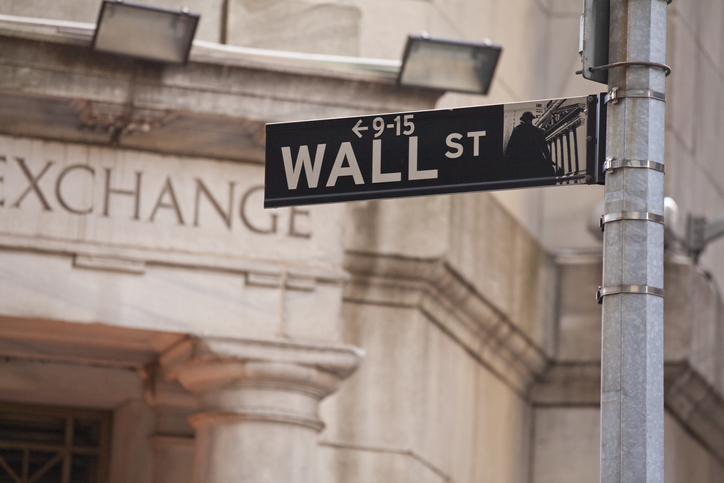
Wall Street is the financial district of New York City. It is the home of the New York Stock Exchange, the world's largest stock exchange by market capitalization of its listed companies. Photo by JaysonPhotography/ Getty Images
Monticello in Virginia
Despite Thomas Jefferson's role as one of the authors of the Declaration of Independence and his writings on equality, he owned over 600 slaves during his lifetime. His grand Monticello residence was constructed using slave labor. Slaves quarried limestone, crafted bricks, and built the house's frame. The expansive Virginia estate of Thomas Jefferson offers daily tours. In 2014, former President Barack Obama conducted a tour for former French President Francois Hollande, noting that the house symbolizes the complex history of slavery in the U.S., acknowledging Jefferson's connections to it despite his involvement in drafting the Declaration of Independence.
Harvard Law School
Established in 1817, Harvard Law School was financially supported by Isaac Royall Jr., a slave owner whose wealth primarily stemmed from African enslaved people working on sugar plantations and farms. Royall and his father possessed nearly 65 slaves, surpassing any other slave owner in Massachusetts. In 2017, the school unveiled a plaque commemorating the role of slavery money in constructing the law school. The plaque lacks specific names of the unknown identities of those owned by Royall. Harvard has issued a report on the institution's connections to slavery, accompanied by recommendations for reparations, including economic and educational support for the descendants of slaves.


